Introduction
One of the biggest fears many beginners have when starting freelancing is getting scammed. After learning a skill and finding potential clients, people often start wondering, “What if someone takes my work and doesn’t pay me?” or “How do I know if a client is genuine?” These are completely normal concerns, especially for someone who is new to freelancing.
Let me tell you what happened to me. In my 2nd month of freelancing, a “client” from USA messaged me on WhatsApp. He said: “I will pay you $2000 for 5 logos. But first send me 2 sample logos for free to check quality.” I was excited and sent the samples. He disappeared. Blocked me. That day I learned a $0 lesson: Never do free work for “tests”.
The good news is that most freelance clients are genuine, but there are also scammers who try to take advantage of beginners. Some may promise large payments for very little work, some may ask freelancers to work for free before making a payment, and others may try to collect personal or financial information.
The good news is that most freelancing scams can be avoided when you know what to look for. By understanding common scam tactics, verifying clients properly, and following safe freelancing practices, you can greatly reduce your chances of becoming a victim.
In this article, we will explain in simple and easy-to-understand language how freelancing scams work, what warning signs you should watch for, and what practical steps you can take to protect yourself.
How Can Beginners Avoid Freelancing Scams and Fake Clients
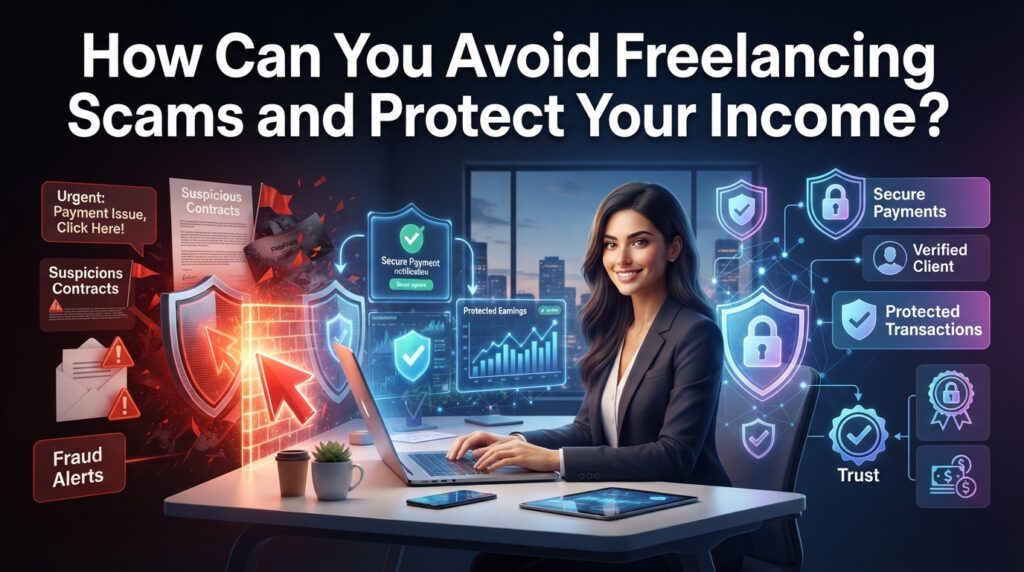
When people first start freelancing, they are usually excited about getting their first client and earning money online. Because of this excitement, many beginners trust people too quickly. Unfortunately, scammers know this and sometimes try to take advantage of new freelancers.
Let’s understand this with a simple example. Imagine a child wants to sell a bicycle. A stranger comes and says, “Give me the bicycle today, and I will pay you tomorrow.” If the child hands over the bicycle without thinking carefully, there is a chance the stranger may never come back. Freelancing works in a similar way. Your work, time, and skills are valuable.
Top 5 Scams in 2026 and How to Avoid Them:
- 1. Too Good To Be True Offer – `$5000 for 1 hour work`. Reality: They want your bank info.
- Rule: If payment is 5x market rate, be suspicious.
- 2. Free Test Scam – Do this 10-page website as a test”.
- Rule: A test should be max 15-30 minutes work. Nothing more.
- 3. Move to WhatsApp/Telegram” Scam* – Client says “Let’s talk outside Upwork to avoid fees.
- Rule: Never leave the platform. You lose payment protection.
- 4. Pay to Get Job Scam – Pay $50 registration fee to start work.
- Rule: Real clients NEVER ask you to pay them.
- 5. Fake Check/Overpayment” Scam – Client sends fake check for $1000 and asks you to refund $800.
- Rule: Only use platform payment system.
Beginners should also be careful when clients try to move conversations away from trusted freelancing platforms too quickly. Freelancing platforms usually provide communication systems, payment protection, and dispute support. If a new client immediately asks you to continue everything through private messaging apps and avoid the platform’s rules, it is wise to be cautious.
Another simple rule is to protect your personal information. Legitimate clients usually do not need your passwords, private financial information, or sensitive personal details to discuss a project.
It is also a good idea to research a client before accepting a project. Read their profile, reviews, ratings, and project history whenever possible.
If you would like to learn more about staying safe while freelancing, the official safety guide from Upwork Trust and Safety[https://www.upwork.com/resources/trust-and-safety].
You can also learn more about online job scam warning signs from Indeed Career Guide [https://www.indeed.com/career-advice/finding-a-job/job-scam-red-flags].
In simple words, avoiding freelancing scams is mostly about being careful, asking questions, protecting your information, and not rushing into offers that seem unrealistic.
How Do You Stay Safe From Freelancing Scams Online
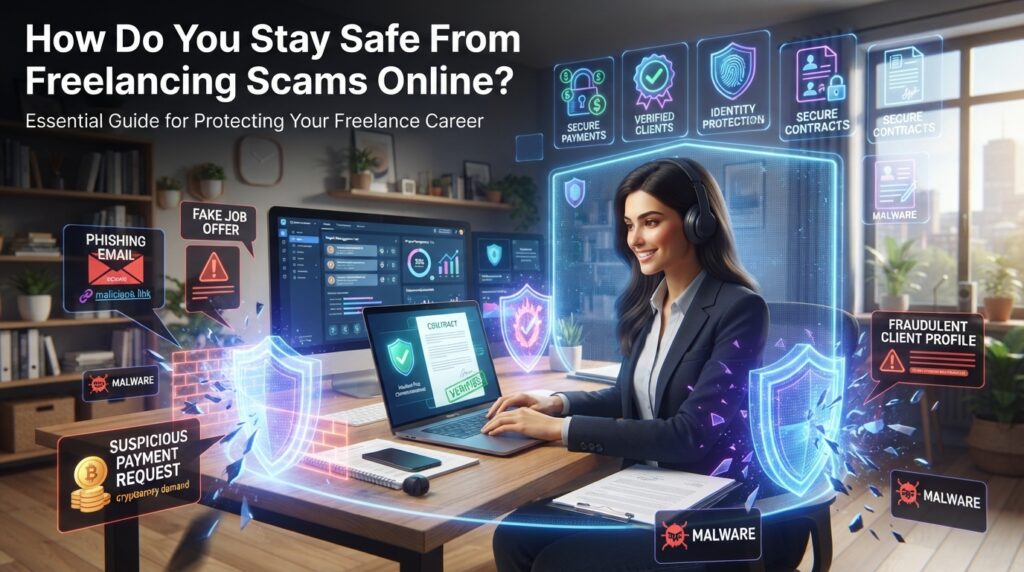
When people hear stories about freelancing scams, they sometimes start thinking that freelancing is dangerous. In reality, freelancing itself is not the problem. The real problem is that some scammers try to trick beginners who do not yet know how to protect themselves online.
One of the easiest ways to stay safe is to communicate through trusted freelancing platforms whenever possible. Platforms such as Upwork [https://www.upwork.com] and Fiverr[https://www.fiverr.com] have systems that help protect both freelancers and clients. If a new client quickly asks you to move the conversation to a private messaging app before discussing project details, take a moment to think carefully before agreeing.
My Safety Checklist Before Accepting Any Project:
- 1. Profile Check* – Does client have photo, payment verified, past reviews?
- 2. Communication Check* – Is he clear about project, deadline, budget?
- 3. Payment Check* – Is payment “funded in escrow” on Upwork or “order placed” on Fiverr?
- 4. Gut Check* – Does something feel off? Trust your gut.
Another important habit is to be careful with links, files, and downloads. If a client sends suspicious files, unknown software, or unexpected links, do not rush to open them until you understand exactly what they are.
You should also protect your personal information. Genuine clients usually need information related to your work, but they do not need your passwords, one-time security codes, or sensitive banking details just to discuss a project.
Beginners should also learn to recognize urgency tactics. Scammers sometimes try to create pressure by saying things like, You must decide right now or “This opportunity will disappear in ten minutes. Genuine clients usually allow reasonable time for questions and discussion.
If you would like to learn more about online safety for freelancers, the official resources from Fiverr Help Centerprovide useful guidance [https://www.fiverr.com/support/articles/360010538678-Staying-safe-on-Fiverr].
You can also learn about common online scam warning signs from [Federal Trade Commission Consumer Advice](https://consumer.ftc.gov/consumer-alerts) [LINK 6].
How Can You Identify Fake Clients Before Accepting a Project
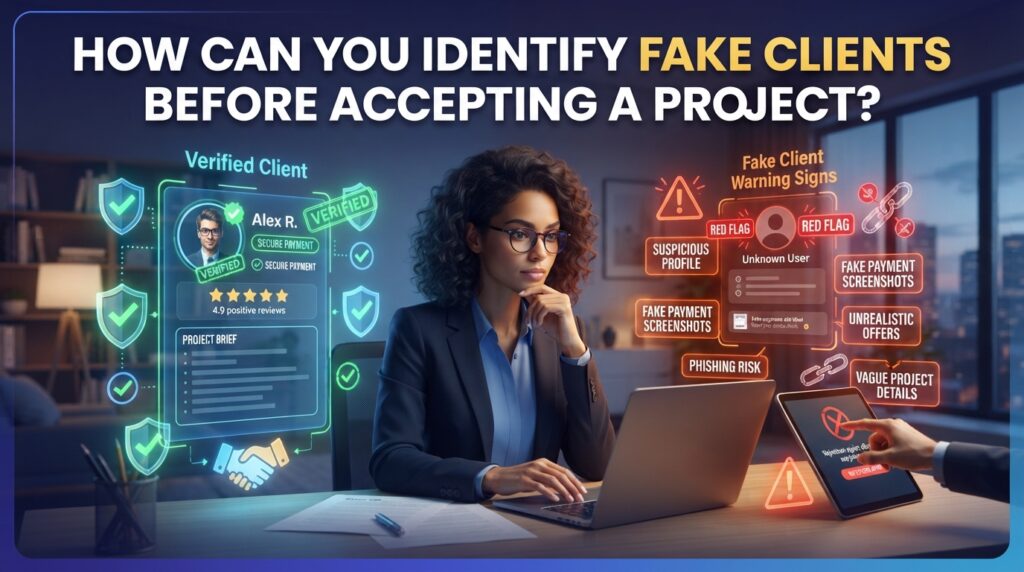
When a beginner starts freelancing, one of the most exciting moments is receiving a message from a potential client. However, because of this excitement, some people accept projects too quickly and later discover that the client was not genuine.
One common sign of a fake client is when they promise a very large payment but provide very little information about the project. For example, someone might say, “I will pay you $1,000, just start working immediately,” without clearly explaining the work, deadline, or requirements.
Another sign is when a client starts asking for personal information instead of discussing the project itself. Genuine clients usually want to talk about your skills, experience, and the work they need completed. If someone immediately asks for passwords, banking details, identification documents, or other unnecessary personal information, it is wise to be cautious.
Red Flags Checklist – Say NO if you see 2 or more:
- 1. Vague project description: “I have big work for you”
- 2. Asks for free samples of 5+ hours
- 3. Poor English + copy-paste message sent to 100 people
- 4. New account with 0 payment history and wants $2000 project
- 5. Wants to pay “outside platform” to “save fees”
Checking a client’s profile and history can also be very helpful. If you are working through a freelancing platform, review their ratings, feedback, and previous projects whenever possible.
Imagine two clients contact you. The first client clearly explains that they need a 1,000-word article, gives you a three-day deadline, and mentions the budget. The second client simply says, I have a huge project for you, but first download this file and then we ll talk. Most people would naturally feel more comfortable working with the first client.
If you would like to learn more about recognizing suspicious client behavior, the official safety resources from Upwork Trust & Safety Center provide useful guidance [https://www.upwork.com/resources/trust-and-safety].
You can also learn about common online scam warning signs from [Federal Trade Commission Consumer [https://www.fiverr.com/support/articles/360010538678-Staying-safe-on-Fiverr].
How Can New Freelancers Protect Themselves From Scammers
When people start freelancing for the first time, they are usually focused on finding clients and earning money. Because of this excitement, many beginners do not think much about online safety until they face a problem. The good news is that most freelancing scams can be avoided if you follow a few simple safety habits from the beginning.
One of the best ways to protect yourself is to communicate clearly and professionally. Genuine clients usually explain what they need, discuss deadlines, answer questions, and communicate openly. Scammers often avoid details, make unrealistic promises, or try to rush you into making quick decisions.
Another important habit is protecting your personal information. Think about it this way: if a stranger on the street asked for your bank password or security code, you would probably refuse immediately. The same rule applies online.
New freelancers should also be careful about clicking unknown links or downloading unexpected files. In freelancing, it is wise to verify files and links before opening them, especially if they seem unusual or unrelated to the project.
Another useful habit is keeping everything documented. Save important messages, agreements, project requirements, and payment discussions whenever possible. Having a written record can help prevent misunderstandings and provide useful evidence if a problem ever occurs.
Beginners should also learn to recognize offers that seem too good to be true. For example, if someone offers a very large amount of money for a very small amount of work without asking about your skills or experience, it is worth being extra careful.
Think of freelancing safety like wearing a seatbelt in a car. Wearing a seatbelt does not mean you expect an accident every day. It simply means you are taking a sensible precaution.
If you would like to learn more about freelancer safety, the resources available at Fiverr Help Center[https://consumer.ftc.gov/consumer-alerts].
You can also learn more about common internet scams and warning signs from [Cybersecurity and Infrastructure Security Agency [https://www.cisa.gov/stopransomware].
Related Articles
Frequently Asked Questions
- Q1: A client is asking me to do work outside Fiverr/Upwork. Is it safe?
- Ans: No. Never. You lose payment protection, dispute support, and your account can get banned. Real clients understand this.
- Q2: What if a client says I will pay you after you deliver?*
- Ans: Big red flag. On Fiverr, client pays first. On Upwork, payment must be in escrow. Never start work without funded payment.
- Q3: I already got scammed. What should I do now?*
- Ans: 1. Report the profile to platform immediately. 2. Do not send more info. 3. If you shared bank details, contact your bank. Learn and move on. It happens to 70% beginners once.
- Q4: How do I know if a $1000 offer is real or fake?*
- Ans: Check 3 things: 1. Is project scope clear? 2. Is client verified with payment method? 3. Is he rushing you? If 2 answers are “No”, it’s 90% scam.
Conclusion
Freelancing can be an amazing way to earn money, learn new skills, and work with clients from around the world. However, just like in everyday life, not everyone you meet online will have good intentions. That is why learning how to identify fake clients and protect yourself from scams is an important part of becoming a successful freelancer.
The good news is that most scams can be avoided when you take your time, ask questions, verify information, and trust common sense. Genuine clients usually communicate clearly, respect your work, and provide realistic project details. Scammers, on the other hand, often rely on pressure, confusion, unrealistic promises, or requests that do not seem reasonable.
Based on my experience, follow this one rule: “If you feel rushed, confused, or pressured, walk away”. There are 1000s of genuine clients. Don’t risk your time and data for 1 suspicious offer.
Think of freelancing safety like learning to ride a bicycle. At first, you may feel nervous and unsure, but as you gain experience, you become more confident and better at spotting potential problems before they happen.
Most importantly, do not let the fear of scams stop you from starting your freelancing journey. Stay alert, follow safe practices, continue learning, and make thoughtful decisions. With the right approach, you can build a successful freelancing career while keeping yourself and your work protected.