Introduction
Many people believe that freelancing is only for those who have a lot of free time. Because of this, students and full-time employees often think that they cannot start freelancing until they finish their studies or leave their jobs. However, this is not always true.
Let me tell you my story. In 2023, I was doing a 9 to 5 job in Karachi and also attending evening classes. I had only 2 hours free at night. I used that time to learn Canva and take $5 gigs on Fiverr. First 3 months I earned only $80 total. But after 8 months, my part-time freelancing income was Rs. 45,000 per month. I didn’t quit my job. I built freelancing step by step.
Think about it this way. Imagine a student who goes to school during the day but spends an hour in the evening practicing a skill such as writing, graphic design, or video editing. Or imagine someone who works a regular job from morning to evening but has a few free hours after work. Those small pockets of time can sometimes be enough to start learning a skill, building a portfolio, and even working on freelance projects.
Many beginners start freelancing part-time because it allows them to gain experience and earn extra income without immediately giving up their studies or their main source of income. Instead of making a big career change all at once, they can learn how freelancing works step by step.
Of course, part-time freelancing also comes with challenges. You need to manage your time carefully, meet deadlines, and balance your projects with your studies or job. But with proper planning and realistic expectations, many people successfully do both.
In this article, we will explain in simple and easy-to-understand language whether it is possible to freelance while studying or working, what challenges you may face, how to manage your time effectively, and what beginners should know before getting started.
Can You Start Freelancing While Studying or Working Full-Time
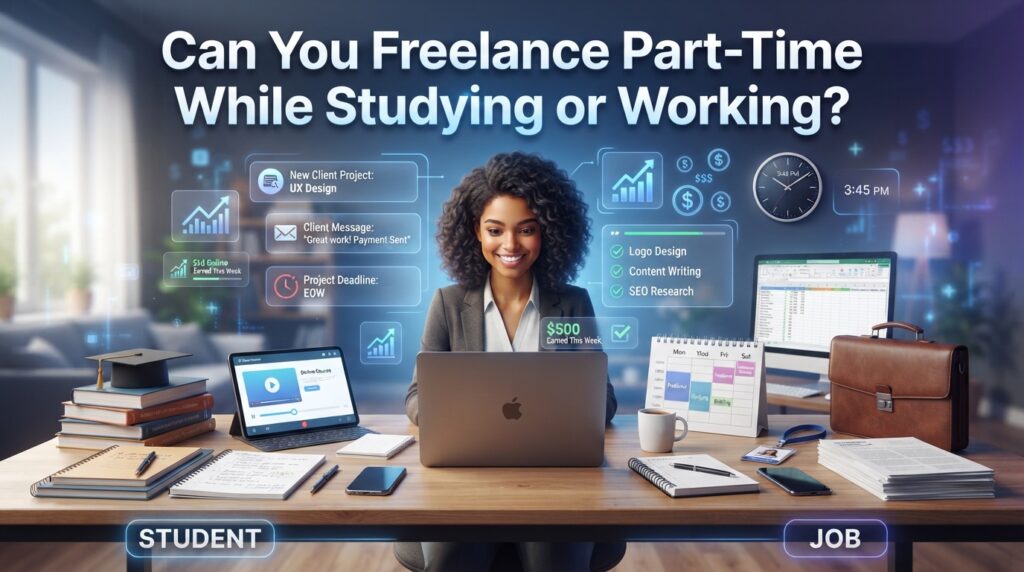
Many people think that freelancing is only for those who have an entire day free. Because of this, students and full-time employees often believe they must wait until they finish their studies or leave their jobs before starting freelancing. In reality, that is not always true.
Let’s understand this with a simple example. Imagine two friends. Ali is a college student, and Ahmed works a regular office job. Ali spends most of his day attending classes and completing assignments, while Ahmed spends his day working at the office. At first, both of them might think they are too busy to start freelancing.
Now imagine Ali has two free hours in the evening after finishing his studies. Instead of spending all that time scrolling through social media, he uses some of it to learn content writing and work on small freelance projects. After a few months, he starts earning money from the skill he learned.
Ahmed’s situation can be similar. He works from 9 a.m. to 5 p.m., but after returning home, he has a few free hours. He decides to learn graphic design and gradually starts taking small freelance projects during his free time. He does not leave his job immediately. Instead, he slowly builds experience while continuing to receive his regular salary.
This shows an important point: freelancing does not always require a full-time commitment in the beginning. Many successful freelancers actually start part-time while studying or working.
Think of it like planting a small tree. You do not need a huge garden on the first day. You simply plant the seed, water it regularly, and give it time to grow. Freelancing often works the same way.
Of course, this does not mean it is always easy. Students still need to complete their studies, and employees still need to perform well at their jobs. If someone accepts too many freelance projects, they may struggle to manage everything. That is why time management is very important.
Another advantage of starting freelancing while studying or working is that you reduce financial pressure. A student can learn and earn without depending entirely on freelancing income. An employee can build freelance experience without immediately giving up the security of a monthly salary.
If you would like to learn more about balancing freelance work with other responsibilities, you can read Indeed’s guide on work-life balance[https://www.indeed.com/career-advice/career-development/work-life-balance].
You can also learn about part-time freelancing and building freelance income from Upwork’s freelancing resources[https://www.upwork.com/resources].
In simple words, yes, you can start freelancing while studying or working full-time. The secret is not having unlimited free time—it is using the time you have wisely.
Is It Possible to Freelance While Going to School or College
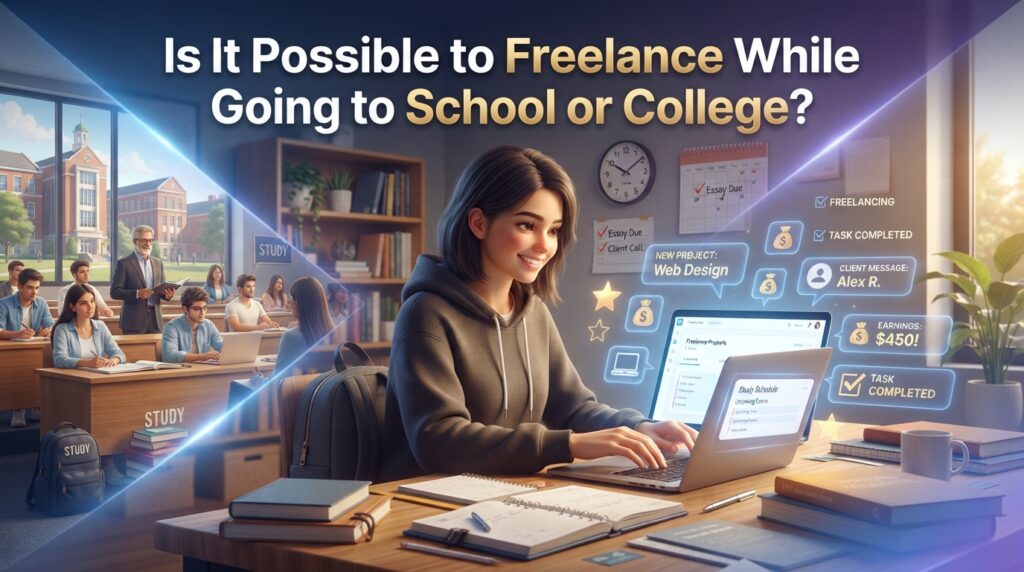
Many students think freelancing is only for adults who have finished their education. Because of this, they often believe they need to wait until they graduate before they can start earning money online. In reality, that is not always true.
Let’s understand this with a simple example. Imagine two students studying in the same college. Both attend classes, complete assignments, and prepare for exams. The first student spends most of their free time watching videos or scrolling through social media. The second student spends some of that free time learning a skill such as content writing, graphic design, video editing, or social media management. After a few months, the second student starts taking small freelance projects and earns some extra income while still studying.
- Sample Weekly Schedule for Students:
- Time | Activity
- Mon-Fri 7-8 PM | Learn Skill for 1 hour
- Sat 10-12 AM | Create portfolio samples
- Sun 2-4 PM | Apply to 5 freelance jobs
This shows that freelancing is not necessarily about having a lot of free time. It is more about how you use the free time you already have.
One advantage of freelancing while studying is that you can gain real-world experience before graduation. Many students finish college with academic knowledge but very little practical experience. Freelancing can help you learn how to communicate with clients, manage deadlines, solve problems, and work professionally.
Another benefit is that students can start building a portfolio early. Instead of waiting until graduation to look for opportunities, they can begin collecting work samples and developing useful skills while they are still studying.
If you would like to learn more about balancing work and studies, you can read [Indeed’s Student Work-Life Balance Guide] [https://www.indeed.com/career-advice/career-development/work-life-balance-students].
You can also explore beginner freelancing advice through Upwork’s Freelancing Resources [https://www.upwork.com/resources].
In simple words, yes, it is possible to freelance while going to school or college. The key is to start small, manage your time wisely, and make sure your studies remain an important priority.
Can You Do Freelancing as a Student or Part-Time Worker
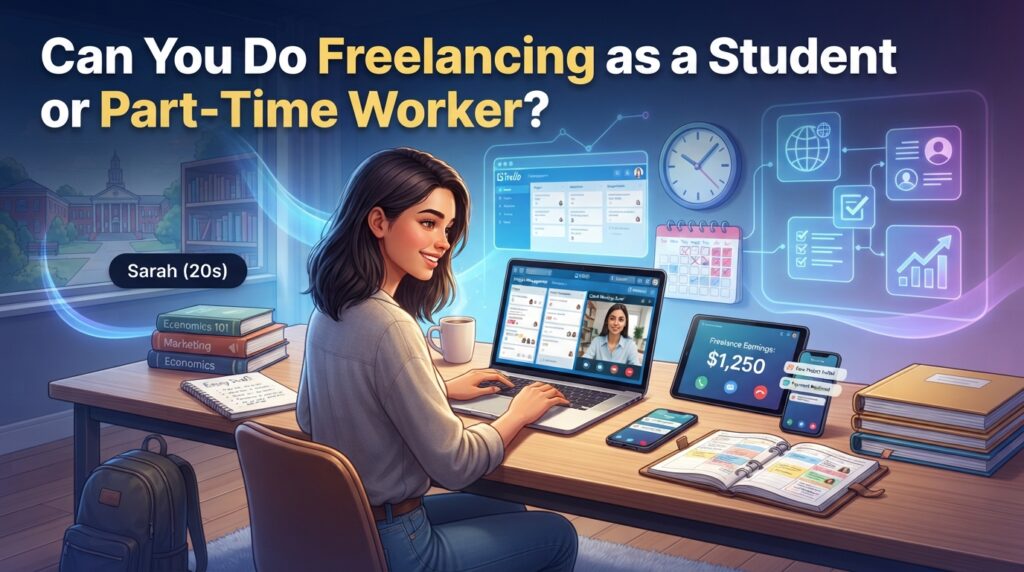
any people think that freelancing is only for people who have a lot of free time. Because of this, students and part-time workers often believe they must wait until they finish their studies or leave their current job before they can start freelancing. In reality, that is not always true.
Let’s understand this with a simple example. Imagine two people. Sara is a college student, and Bilal works a part-time job in the evenings. Both of them are busy with their daily responsibilities. Sara has classes, homework, and exams, while Bilal has work shifts and other commitments.
Now imagine Sara has one or two free hours after finishing her studies. Instead of spending all that time watching random videos, she starts learning content writing and practices writing sample articles. After a few months, she begins taking small freelance projects and earns some extra money.
Bilal’s situation can be similar. He works part-time, but he still has a few free hours during the day. He decides to learn graphic design and slowly starts working on small freelance projects. He does not quit his part-time job. Instead, he builds his freelance skills little by little while continuing to earn from his regular work.
This shows an important lesson: freelancing is not always about having a lot of free time. It is often about using the time you already have in a smart way.
Think of it like saving money in a jar. If a child puts a small amount of money into the jar every week, the jar slowly fills up over time. Freelancing can work the same way. Even a few hours each week can help you learn a skill, build a portfolio, and gain experience.
Of course, balance is important. Beginners should start with small projects and gradually increase their workload as they gain confidence. One advantage of freelancing as a student or part-time worker is that you can learn and earn at the same time.
If you would like to learn more about balancing work, study, and personal responsibilities, you can read Indeed’s guide to work-life balance [https://www.indeed.com/career-advice/career-development/work-life-balance].
You can also explore beginner freelancing advice and career resources through Upwork Resources [https://www.upwork.com/resources].
Can You Build a Freelancing Career While Studying or Working
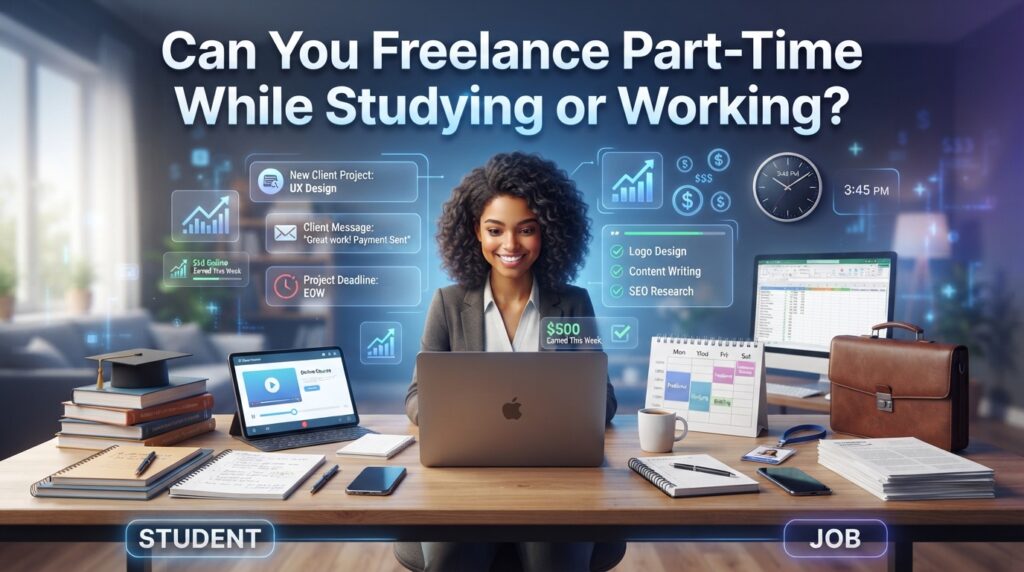
Many people believe that building a freelancing career requires quitting school, college, or a full-time job. Because of this, they often postpone freelancing and tell themselves, I start after graduation” or “I’ll start when I leave my job.” However, that is not always necessary.
Let’s understand this with a simple example. Imagine two people. Ali is a university student, and Ahmed works a regular job. Both have busy schedules and responsibilities. At first, they think building a freelancing career is impossible because they do not have enough free time.
Now imagine Ali spends one or two hours each day learning content writing. He practices regularly, creates work samples, and slowly starts taking small freelance projects. A few months later, he has completed several projects and built a small portfolio. By the time he graduates, he already has experience, skills, and clients.
Ahmed’s journey can be similar. He works during the day, but he uses some of his evenings or weekends to learn graphic design. At first, he only accepts small projects. Over time, he gains confidence, improves his skills, and starts receiving more work. Eventually, freelancing becomes a significant source of income alongside his regular job.
This shows an important lesson: a freelancing career is usually built step by step, not overnight.
Think of it like building a house. Nobody places the roof first. The foundation comes first, then the walls, and finally the roof. Freelancing works the same way. First, you learn a skill. Then you practice it. After that, you create a portfolio, get clients, gain experience, and gradually grow your career.
One advantage of starting early is that you gain experience while others are still waiting for the “perfect time.” For example, a student who starts freelancing during college may graduate with practical experience, a portfolio, and client testimonials.
If you would like to learn more about balancing multiple responsibilities, you can read Indeed’s Work-Life Balance Guide[https://www.indeed.com/career-advice/career-development/work-life-balance].
You can also explore career-building advice through Upwork Resources [https://www.upwork.com/resources].
In simple words, yes, you can build a freelancing career while studying or working. The key is learning consistently, managing your schedule wisely, and taking small steps forward every day.
Related Articles
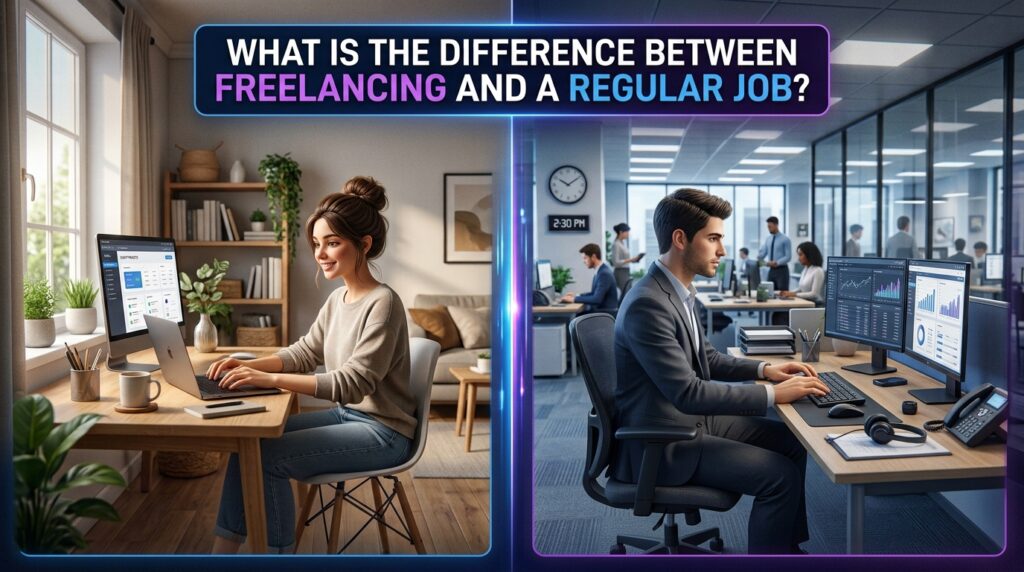
- What Is the Difference Between Freelancing and a Regular Job
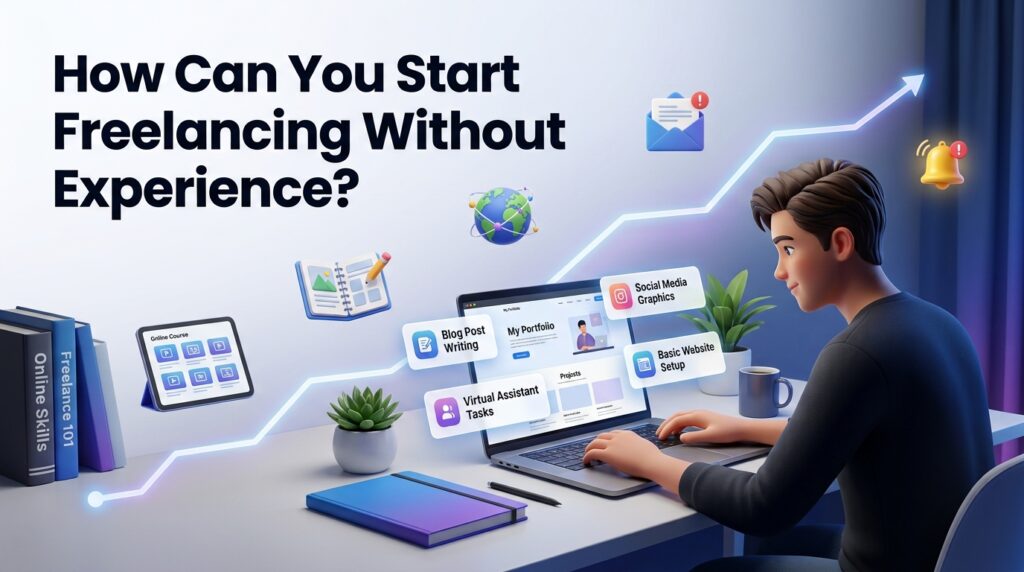
- How Can You Start Freelancing Without Experience
Frequently Asked Questions
- Q1: How many hours per week do I need to start part-time freelancing?*
- Ans: Even 5-7 hours per week is enough to start. Use 1 hour daily to learn, and weekends to apply for jobs. I started with just 2 hours per night.
- Q2: Will freelancing affect my studies or job performance?
- Ans: Only if you take too much work. Rule: Never accept a project with deadline during exams or busy work week. Start with 1 small project per month.
- Q3: Which skills are best for students with limited time?
- Ans: Content writing, Canva design, social media management, and data entry. These can be done in 30-60 minute chunks and don’t need long meetings.
- Q4: Should I tell my boss or university that I am freelancing?
- Ans: Check your job contract first. For university, no problem. For jobs, make sure freelancing doesn’t conflict with company policies or working hours.
Conclusion
Building a freelancing career while studying or working may seem difficult at first, but it is completely possible when you take things one step at a time. You do not need to quit your studies, leave your job, or have hours of free time every day to get started. Many successful freelancers began by using a few spare hours each week to learn a skill, practice, and work on small projects.
Based on my experience, the biggest mistake is trying to do everything at once. Start with 1 skill, 1 platform, and 1 project. When you get comfortable, then scale up.
Think of freelancing as a long journey rather than a race. You do not have to reach your destination in a single day. Every new skill you learn, every sample you create, and every project you complete helps you move one step closer to your goal.
The most important thing is to stay consistent. Even small progress can lead to big results over time. If you keep learning, improving your skills, and managing your time wisely, you can gradually build a freelancing career alongside your studies or job without putting unnecessary pressure on yourself.
In simple words, you do not have to wait for the perfect time to start freelancing. The best time is often when you begin taking small, practical steps with the time and resources you already have. A year from now, you may be surprised by how much progress those small steps can create.