Introduction
Many people think that creating and selling an online course is only for teachers, professors, or experts with years of experience. Because of this, beginners often believe they have nothing valuable enough to teach. But the reality is much simpler. If you know something useful that can help another person, you may already have the foundation for an online course.
Let me tell you my story. In February 2024 I was broke and knew only 1 skill. Canva Poster Design. I recorded my screen for 2 hours. 6 lessons. Total cost zero. I uploaded it to Gumroad. Title: Canva for Beginners in Urdu. First month I made 19 dollars. 9 months later that same course made 3400 dollars. 210 students. I never stood in a classroom.
An online course is simply a collection of lessons that teaches people how to learn or do something. It could be about graphic design, cooking, photography, freelancing, fitness, language learning, computer skills, or almost any other useful topic.
Let’s understand this with a simple example. Imagine you have learned how to edit videos using a particular software. You may not be a professional teacher, but you can create simple lessons showing beginners how to edit their first video. If someone finds those lessons helpful, they may be willing to pay for the course.
The good thing is that you do not need a huge classroom or expensive equipment. You can create lessons using a computer, microphone, screen recording software, and other simple tools. You can also start with a small course instead of trying to create a huge program from the beginning.
However, creating a course does not automatically mean that people will buy it. You still need to choose a useful topic, explain things clearly, create good lessons, and find people who are interested in learning.
In this guide, we will explain in simple words how beginners can create and sell an online course, what they can teach, which platforms they can use, and how they can find their first students.
What Is an Online Course and How Does It Work
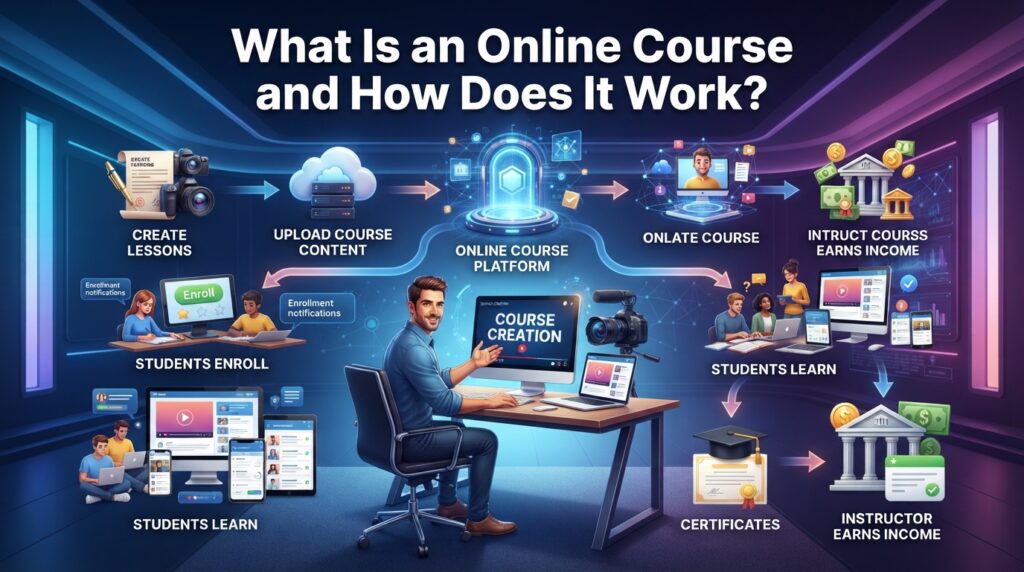
An online course is simply a way of teaching something through the internet. Instead of going to a classroom and sitting in front of a teacher, students can learn from videos, notes, exercises, and other lessons using their computer or mobile phone.
Let’s understand this with a very simple example. Imagine you know how to make cakes. You record a video showing the ingredients, explain each step, and then create a few more lessons about baking, decorating, and common mistakes. When you put all these lessons together, you have an online course.
The 4-Step Process in 2026
- You Choose 1 Skill. Something you can teach in 1 to 3 hours
- You Record Lessons. Use phone, screen recorder, or Zoom
- You Upload to Platform. Add title, description, price
- Students Buy and Learn. They watch anytime, you earn passively
An online course usually has several lessons arranged in a simple order. First lesson explains basics, next lessons build on it. This helps students learn one thing at a time.
Students can access the course through an online learning platform. They watch lessons whenever they have time, download files, and review anytime.
For the person creating the course, the process is also fairly simple. Choose a topic you understand. Plan lessons. Record. Upload. Make it available.
The important thing is that a good online course should actually help students learn something useful. You do not need hundreds of lessons. Even a 60 minute course can be valuable if it solves 1 clear problem.
Some popular platforms for creating and selling online courses include Udemy at https://www.udemy.com/teaching
You can also use Teachable at https://teachable.com
In simple words, an online course is like a classroom on the internet. You teach something through organized lessons, and students learn from those lessons whenever it is convenient for them.
Can Beginners Create an Online Course Without Teaching Experience
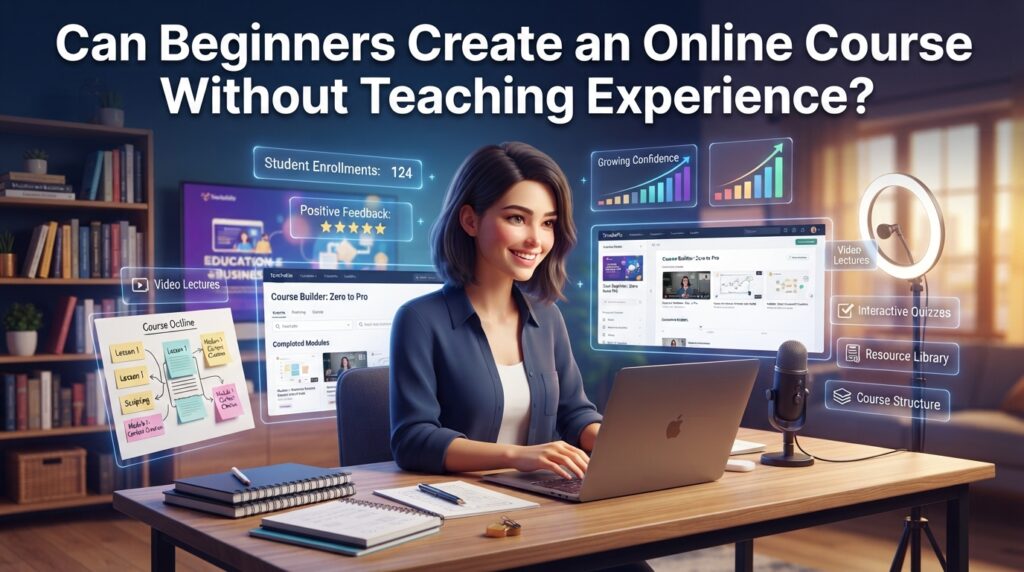
Yes, beginners can create an online course even if they have never worked as a teacher. Many people think they need a teaching degree or years of classroom experience before they can teach something online, but that is not always true.
Let’s understand this with a simple example. Imagine you have learned how to edit videos. You are not a professional teacher, but you know how to use the software and can explain the basic steps to someone who has never used it before. You could record simple lessons showing them how to edit their first video.
3 Types of Beginner Courses That Sell in 2026
- Tool Tutorials. Learn Canva in 1 Hour, Excel for Freelancers, CapCut Editing
- Skill Based. How to Get First Freelancing Client, How to Cook 5 Pakistani Dishes
- Problem Solving. Organize Your Study Schedule, Create Resume for Freshers
The important thing is not whether you have a teacher’s certificate. What matters is whether you understand the topic well enough to explain it clearly and help someone else learn it.
You can also start by teaching something you have personally learned. For example, maybe you have learned how to create a website, use a design tool, manage social media, cook a particular type of food, or improve a specific skill.
Beginners can also make their courses simple. You do not need to create a course with 50 lessons. Start with a small course that teaches one clear skill from beginning to end.
However, you should always be honest about your experience. Do not claim to be an expert if you are not one. Teach what you genuinely understand and make sure your lessons provide real value.
You can use platforms such as Thinkific at https://www.thinkific.com to explore how online courses are created and sold.
In simple words, you do not need to be a professional teacher to create an online course. If you know something useful and can explain it clearly, you can start small and improve over time.
What Topics Can You Teach in an Online Course
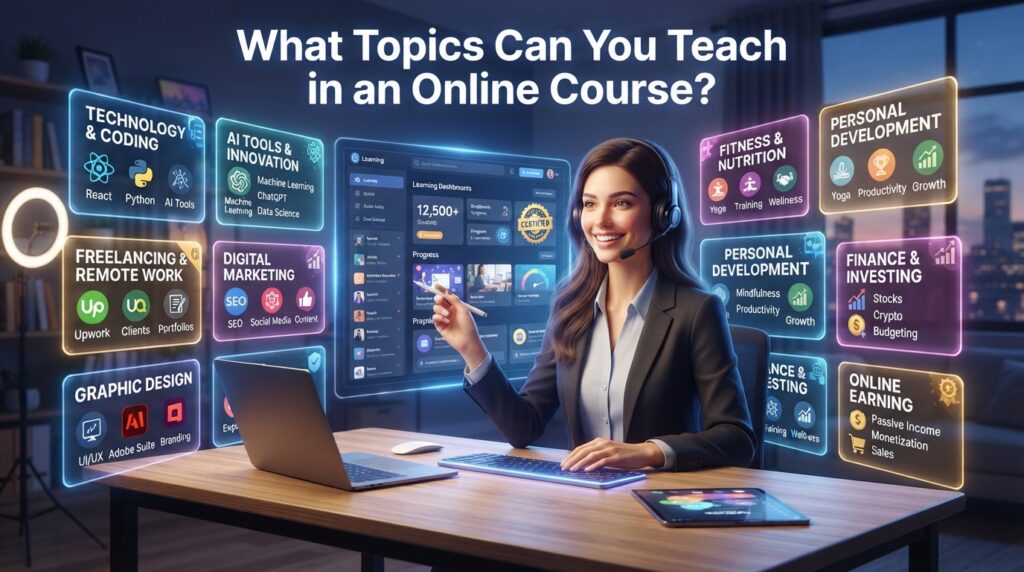
One of the first things beginners need to decide is what they can actually teach in an online course. The good news is that you do not have to teach a complicated subject. A useful course can be about something simple if it helps people learn a skill or solve a problem.
Let’s understand this with an easy example. Imagine you are very good at making cakes. You could create a course that teaches beginners how to bake a cake at home. You start with ingredients, explain baking, then show decoration.
Top 10 Course Topics Selling in 2026
- AI Tools for Beginners. ChatGPT for Students, Midjourney for Designers
- Freelancing Skills. Fiverr, Upwork, How to Get First Client
- Social Media Skills. Instagram Reels Editing, TikTok Growth
- Tech Skills. Canva, CapCut, Notion, Excel
- Career Skills. Resume Writing, Interview Prep, LinkedIn Profile
- Health and Fitness. Home Workout, Weight Loss for Beginners
- Creative Skills. Photography, Video Editing, Drawing
- Money Skills. Budgeting, Crypto Basics, Saving Tips
- Language Learning. Spoken English in 30 Days, Urdu for Kids
- Hobby Skills. Cooking, Baking, Gardening, Crochet
The most important thing is to choose a clear topic. A course called Learn Everything About Computers is too broad. A course such as Learn the Basics of Microsoft Excel for Beginners is much clearer.
Before creating a course, ask yourself three simple questions. What do I know? What problem can I help people solve? And who would benefit from learning this?
You can also explore platforms such as Kajabi at https://www.kajabi.com to see the types of courses people create and sell online.
In simple words, you can teach almost any useful skill that you understand well. Start with something you know, choose a specific topic, and focus on helping your students achieve a real goal.
Where Can You Create and Sell Online Courses
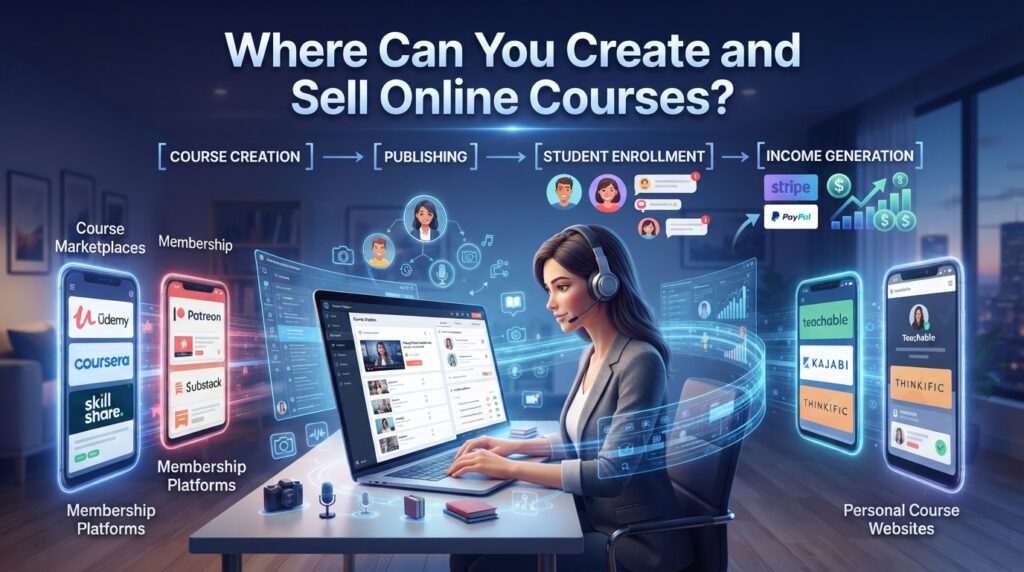
Once you decide what you want to teach, the next question is where you can create and sell your course. The good news is that you do not need to build your own learning website from scratch.
Let’s understand this with a simple example. Imagine you want to open a small classroom. You need a place where students can enter, see the lessons, learn from you, and ask questions.
Best Platforms for Beginners in 2026
- Udemy. Best for traffic. Students already search here. You share revenue. https://www.udemy.com/teaching
- Teachable. Best for your own brand. You control price and email list. https://teachable.com
- Thinkific. Best for clean course sites. Free plan available. https://www.thinkific.com
- Gumroad. Best for 1 hour mini courses and PDFs. Super simple. https://gumroad.com
- Skillshare. Best for creative skills. You earn per minute watched. https://www.skillshare.com/teach
For beginners, it is usually better to choose one platform instead of trying several at the same time. Learn how it works, create your first course, and improve your process.
The right platform depends on what you need. A marketplace like Udemy can be useful if you want access to an existing audience, while platforms such as Teachable or Thinkific can give you more control over your own course business.
In simple words, you can create and sell online courses through platforms such as Udemy, Teachable, Thinkific, Gumroad, and Skillshare. Choose a platform that fits your goals and focus on helping your students.
Related Articles
Can You Build an Online Coaching Business Without a Big Audience
Can You Make Money Selling Digital Products Online
Frequently Asked Questions
- Q1. What equipment do I need to start
Ans. Phone or laptop, free screen recorder like Loom or OBS, and a 10 dollar mic. You can start with zero budget. Good audio matters more than fancy video. - Q2. How long should my first course be
Ans. 45 to 90 minutes. Teach 1 outcome. Example. Edit Your First YouTube Video in CapCut. Students prefer short and actionable. - Q3. How much can a beginner earn in first 3 months
Ans. Realistic is zero to 300 dollars. My first course made 127 dollars in 90 days. Course number 3 is usually where income starts growing. - Q4. Can people in Pakistan sell courses internationally
Ans. Yes. Use Gumroad, Teachable, or Udemy. Receive payment through Payoneer or Wise. Price in dollars and sell globally. - Q5. Do I need to show my face on camera
Ans. No. 60 percent of top selling courses in 2026 are screen recordings with voice. If you can explain well, students will buy.
Conclusion
Creating and selling an online course can be a great way to turn your knowledge or skills into an online business. The best part is that you do not need to be a famous teacher or have years of teaching experience. If you know something useful and can explain it clearly, you can start with a simple course.
Based on my experience. Do not aim for perfect. Aim for helpful. My first course was messy but it helped 210 people.
You do not need to create a huge course from the beginning. Start with one topic, break it into easy lessons, and focus on helping students achieve a clear goal. As you gain experience and receive feedback, you can improve your lessons.
Choosing the right platform is also important. Platforms such as Udemy, Teachable, Thinkific, Gumroad, and Kajabi can make it easier to create, organize, and sell your course.
Remember, your first course may not be perfect, and that is completely okay. What matters is that you start, learn from your experience, and continue improving. Every course creator was once a beginner.
In simple words, if you have a useful skill or knowledge that can help others, you can turn it into an online course. Start small, teach honestly, help your students, and keep learning. With patience and consistent effort, an online course can become a valuable source of income and a long-term online business.